










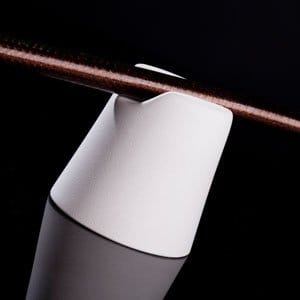
CA Electronics the Dutch company that manufactures the AP-10 Loudspeaker, the HA-10 Loudspeaker and a range of ceramic isolation cones has introduced the CA Ceramic Cable Elevators. The company’s press release had the following to say about the cable elevators  “…have a modern and sleek design, and offer great performance. Made out of special Ceramic material, the Cable Elevator is perfect for de-coupling your cables from the ground. The Ceramic will absorb small vibrations which will cause distortion in your sound, and shields against static electricity.”


Share

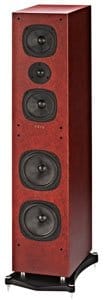
Quad has added a couple of floorstanding loudspeakers to their Classic L range of speakers.

The two new models are the L 23L and the 25l and both use Kevlar drivers and a downward firing bass radiator.

The 23L is 92.5cm high with a 2.5cm fabric dome tweeter and 12.5cm drivers for mids and bass. The downward firing radiator is 16.5cm.

The 25L is the bigger of the two new models and stand 112.5cm tall, has 12.5cm drivers for mid duties and a pair of 16.5cm units for the bass. The downward firing bass radiator is 20cm. The 25L shares the same tweeter as its smaller sibling.

Prices are £1300 to £2200 depending on finish.


Share

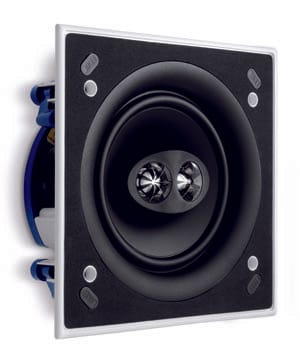
Not Hifi in its strictest sense but interesting news none the less, KEF has announced details of the latest additions to its Custom Installation loudspeaker range.  The all-British designed new models are the CS and QS SQUARE and the CL and QL RECTANGLE loudspeakers.

Models QS and QL feature KEF’s Uni-Q driver array, while the CS and CL models have an Asymmetrical Tweeter Island. The new additions also include forward woofer mounting and an Ultra-Thin Bezel (UTB) design. Rough-in frames and rear enclosures are available as optional features, as are magnetic grilles, new wider mounting leg fixings, protective PCB covers and moisture-resistant fixings and grilles.


Share

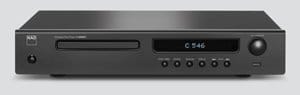
Building on the past performance of its C 545BEE, NAD announces the release of the new C 546BEE CD Player. Supporting a wide range of program material including CD, CD-R, CD-RW, the C 546BEE will play encoded MP3 and WMA music in their natural, intended form.

In addition to supporting all of today’s latest optical formats, “NAD’s engineering and design team has overhauled all of the circuitry and component choices to improve low frequencies, for a level of musical precision and detail that can be heard”. Using a 24-bit high-resolution DAC and two separate power regulators for analogue and digital audio, NAD has limited electrical interference and produced low-level linearity for all digital music.

A number of user-friendly features and a full function remote control allows for navigation and programming of up to 20 tracks.

Suggested Retail Price: NAD C 546BEE – £499.00


Share

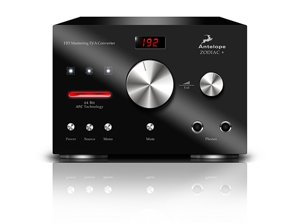
A lot of interesting audio equipment is coming out of Eastern Europe at the moment.  Hifi Pig has been reviewing and featuring several items from Poland recently, and now it’s Bulgaria’s turn with Antelope Audio’s 2295€ Zodiac+ DAC / Pre-amp.

Driven by the tremendous interest in computer audio, DACs are now experiencing a very strong resurgence in popularity.  The market is swamped by them!   What separates Antelope Audio from the vast majority of its competitors is the company’s established expertise in digital clocking. Antelope Audio is a pro-audio company best known for its master clocks including an atomic Rubidium model.

All 3 of the Zodiac range are encased in a very attractive (read: seriously cute!) compact somewhat cubic chassis (165x112x190mm).

Two rotary volume controls are provided on the front panel.  One to control the outputs to a pre-amp, one to control the two 6.3mm headphone jack outputs.  Both are analog controls, not digital ones that can reduce the digital signal’s bit-rate.

Input selection is via a single button, which scrolls through the auto-detected inputs whose abbreviated names are shown in the LED display at top-centre of the faceplate. When the Zodiac locks onto the source it displays the sample rate on offer. This display also shows output level (dB reduction from maximum) while the control is being used and for a second or two afterwards.

The only obvious omission is of a remote control for volume and input. You get one of these in machined aluminium with the top Zodiac model, the Gold, so the functionality has been developed and it would have been good if remote control capability with, perhaps, a less costly handset had been included with the Zodiac+.

Interestingly – and occasionally usefully! – a mono button is part of the feature set.  Stereo sources are converted to a central monophonic image.  I don’t think I’ve seen this on a DAC before – I found it useful for the occasional solo piano recording where the image of the piano was engineered to be way too wide and filled up pretty much the whole of the space between the speakers.  Much better to hear it as a centrally focused sound, I think.  I’m sure that Antelope Audio included a mono option for other reasons, although I can’t think what they might be ….

The rear panel is a very busy place indeed, with a multitude of digital and analog inputs, and RCA single-ended and XLR balanced outputs.  Digital inputs encompass SPDI/F co-ax (RCA) and optical (TOSLINK) as well as USB.

The Zodiac+ is the middle model of three Zodiac DACs, the base model is due this spring and the Zodiac Gold sits at the top of the tree at £500 more than the Plus.

The Zodiac+ has its own onboard clock.  I was a bit baffled reading the instruction manual to see that the clock is “oven controlled”.  Apparently what this means is that it’s kept at a constant temperature, improving stability and, according to Antelope, bringing significant sonic benefits.

The USB will accept signals up to 192kHz, although the use of a mini B socket is slightly odd and limits the array of good-quality USB leads that can be used, although Antelope supply one with the Zodiac+. More »

Share

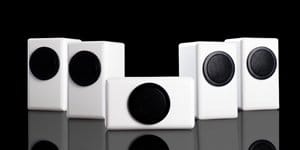
CA Electronics, the Dutch manufacturer of the renowned AP-10 loudspeakers and an innovative range of ceramic isolation products has announced the release of the HE-10 loudspeaker system.

The HE-10 is a small and sleek looking loudspeaker ideally suited to smaller rooms, audio visual duties or as a state of the art desktop system when connected to a computer.

For use in audiovisual systems CA Electronics have added a matching centre speaker, allowing for great sound when watching movies.

The HE-10 has been designed in such a way as to negate the need for filtering resulting in zero errors from crossover components and giving the listener outstanding imaging and a purity of sound rare at any price point.

Made in the Netherlands the HE-10 is fabricated from eco-friendly materials.


Share

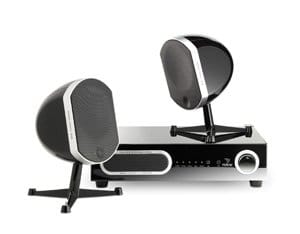
Computers Unlimited is bringing Focal’s Bird range to Britain for the first time. The “stylish, flexible” systems from the French audio manufacturer have already won praise for their design and performance from reviewers and customers in France, the US and beyond.

Bird is three 2.1 systems based around Power Bird, a central unit featuring 2x35W amplification, wired and wireless connectivity, and the hidden bass boost of a six-inch, 80W subwoofer.

The Power Bird can be used in flat, vertical or horizontal positions. It can be hung on the wall – aided by its integrated Polyfix mounting system – or even slipped under a sofa. It’s paired with three sizes of speaker: Little Bird, Bird and Super Bird; these too are highly flexible about where they sit.

“Focal has designed the Bird 2.1 Systems to offer style and simplicity. For example, every Bird system supports wireless audio, with Focal giving users the choice of Kleer  – built into Power Bird – or aptX Bluetooth connectivity via an optional receiver module. Apple AirPlay can also be used, by connecting an AirPort Express to the Power Bird’s optical input. ”

Both Kleer and Bluetooth solutions need no wi-fi network. Kleer supports uncompressed audio: users just add a tiny Focal USB or iTransmitter dongle to their computer or Apple iPad/iPhone. Focal’s Universal aptX Bluetooth receiver opens up wireless audio to users of any Bluetooth-compatible smartphone, tablet or computer, including the latest aptX-equipped Android devices.


Share

The Clarity Alliance has launched as the new trade association for the UK’s hi-fi and home cinema industry, with the primary purpose of promoting the benefits of quality home entertainment to new consumers.

The launch of Clarity came about as a result of the Project Grass initiative, which was set up by retail association, BADA, in the wake of discussions held with its members and industry wide surveys. The project’s objective was to gain a thorough understanding of what the industry as a whole wants from a trade association and to devise a new structure that fulfills the objective and is relevant for the hi-fi and home cinema industry of today and tomorrow. As of 11th July BADA, the British Audio-Visual Dealers Association, will cease to exist.


Share

Polk Audio the Baltimore based hifi loudspeaker manufacturer is celebrating its 40th Anniversary with a plan to reinvigorate the brand’s presence with a new logo and a newly designed website.

Ben Newhall, Polk Audio’s Senior VP of Sales and Marketing said “As we take stock of where we are as a company, we are quite proud of our achievements over the past four decades. Now is the right time to renew our branding and our logo as well as our efforts in communicating the compelling story of our products and people.


Share

Hisound Audio Studio-V

First of all let me say what impressive packaging this media player comes in. It’s clearly aimed at a higher end marketplace and I think this all adds to the sense of occasion when getting a new bit of kit. The box which the Studio-V sits is leather bound and then underneath you have the earphones, USB cable and the (disappointingly) American mains USB charger. Of course this isn’t going to be a problem if you have your laptop with you, but for those wishing to take the Studio on holiday or business without a laptop it’s going to mean buying a converter…or using the charger from one of your other devices.

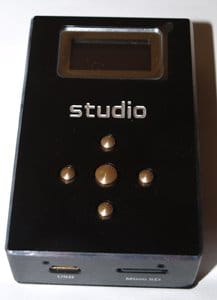
Taking the Studio out of the box it becomes clear that this is a well made bit of kit. It’s an 8cm x 5cm x 2cm (LWD) black and silver aluminium box with a small screen (2.3cmwide and 1.2cm high) and 5 metal buttons on the front. On the bottom of the unit are a mini-USB input and a slot for mini SD cards. On other end there’s a headphone out, a line in (both catered for by mini jacks) and a reset button. The unusual feature of the Line in would suggest that Hisound Audio are extremely confident in the capabilities of the onboard DAC and amplifier.

The Studio is quite heavy and it feels good in the hand. Brushed aluminium does indeed look very cool and this little player takes full advantage of its aesthetics, but very quickly it becomes apparent that greasy fingers will soon mark the beautiful finish…it’s also painted black and I would imagine that after prolonged and none too careful use, it will become scratched.

I mentioned the screen earlier and whilst it is indeed very small, particularly for those used to the screens used on iPod touch players and the like, it is very clear and bright, this being achieved by using OLED (Organic Light-Emitting Diode) technology. Needless to say on such a small screen you are never going to be able to play games or replay video, but that point is somewhat moot in that the Studio-V doesn’t allow for anything other than the playback of music files – if video and games are features that are important to you then I suggest that you look elsewhere.

On the main menu you have the option of selecting Music, Source Manager (internal hardrive or micro-SD), Settings and Now Playing – all the functions are pretty straightforward and the basic instruction manual covers everything in enough detail and clear enough English to make it simple enough – the only function not outlined is the Btn sound enable/disable option and this remains something of a mystery (I kept it enabled the whole time I was testing the unit). The only other thing to be aware of on the settings front is the setting of the HDMS to enable if you are using the Studio-V as a source into your main hifi.

Attaching the Studio-V to the computer is a simple affair using the included mini usb cable and putting FLAC files on the unit is an undemanding drag and drop procedure – I managed to get 18 albums onto the 4gb hardrive but using the micro-SD card slot and a suitable card (up to 16gb) this can be increased significantly. Adding a micro-SD is pretty straightforward with the inserted card showing up on your computer as a whole new drive – again a simple drag and drop is all that is required. Other file formats can be used, including MP3, WMA, WAV, OGG, AAC etc.

Accessing your music is again pretty straight forward and you can search by Artists, Albums, Genres, Year and Favourite and getting to the tune you want to play is again straightforward. One niggle I have here is that the screen size means that you don’t get to see the whole of the artist and title information and it scrolls across the page.

Ok, so the Hisound Audio Studio looks great, feels fabulous and the functionality is acceptable, but how does it sound? After all, if you are paying just shy of £300 for a portable media player that is billed as being specifically for the audiophile marketplace, then it needs to deliver on sound quality.

Let me say that I don’t particularly get on with normal In Ear Monitors and so whilst the included headphones are of pretty decent quality they didn’t get a great deal of use. Instead I opted to use my Grado 325is I reviewed some time ago and I did use the unit with Hisound Audio Popo IEMs for one of the listening sessions, as they come with different in ear fittings. I’ve read in other reviews of the Studio-V that it suffers badly form mobile phone interference and so I have had the unit sat on my desk with my mobile phone sat immediately beside it and I have heard interference on a couple of occasions – perhaps other phones do interfere more I don’t know – though given the ‘robustness’ of the Studio-V I don’t think I’d want it sat in my pocket with a more ‘delicate’ item for fear of it scratching it or stealing its lunch money. Hisound Audio contacted me to suggest that the test unit would require 200 hours of burn in time; I’m not a great believer in all that kind of thing, but did leave it playing unattended for a few days by way of playing the game. Battery life is a claimed 80 -100 hours and, whilst I’ve not measured this with anything like the accuracy I perhaps should have, you do get very good amounts of playback time from a single charge – it’s been sat playing for five working days and is still showing good battery charge since its last recharge and so I’d say it’s good for at least 40 to 50 hours.

So what does it sound like? 

I compared the Studio-V to an iPod Touch and a D-Jix player and whilst the user interface on the competition is streets ahead of the test unit, I can’t help thinking that they both fall a good deal short on sound quality, though it must be said the little D-Jix is a fraction of the price of the other two. I was expecting hiss on the Studio-V as this has been widely reported in previous reviews and it is indeed in evidence with this unit though at such a low level its only there on the very quietest passages – it’s a little like a very faint tape hiss.

The word I keep on writing down on repeated listens is “neutral” and that is what the Studio-V would appear to be – neutral and pretty much transparent. The top end is clear and ever so slightly bright, the mids are fabulous and the punchy bass bounces along. It’s an engaging little bit of kit that gets your toes tapping to the music and to me that is what any player should do – I suppose this is what folk mean by “being musical”. If I’m honest I spent more time after the first few sessions with the Studio-V

I took the Studio-V out for the day whilst eldest son was sitting the oral part of his French Baccalaureate. This was supposed to last just an hour, but 4 hours later I was still sat waiting and listening to tunes in the car using the Hisound unit. I found it easy to listen to for all this time and not at all fatiguing which cannot be said for the other two units I compared it to. I tend to get ‘bored’ of listening to the iPod touch for any extended period in one sitting an that’s why I don’t often take it out with me – I find it a bit dull and un-engaging after a while.

Conclusion

The Hisound Audio Studio V is a great bit of kit in my opinion. It is beautifully presented and exudes physical quality. What I don’t like a great deal is the small display which makes navigation around your tunes initially a tad fiddly – you do get used to it but I’d say that a better display would definitely be on my wish list for it. Let’s face it though, if you are spending this kind of money on a digital audio player then perhaps functionality will not be the top of your priorities (hell, my amplifier doesn’t even have a remote) and how it deals with delivering music will be the be all and end all and it is here where I believe the Studio-V performs very well indeed. It is, to my ears at any rate, a transparent little unit capable of excellent results. There is clearly a small issue with hiss, but for me it was a distraction of little consequence. At its price point I believe the Studio-V would score ‘middling’ on value for money, but would score high on sound quality.

Author  – Stu


HisoundAudio Rocoo Digital Audio Player

It’s a very competitive market out there for portable music players in general, so when something new hits the market, the expectation is “what’s this one got that others haven’t?” or “why buy this one over the myriad of others in the same price bracket?”. Well, I fully admit to not being bang up to date with portable music players, although our household does sport a couple including the ubiquitous iPod, so I was looking forward to seeing how the Rocoo unit stacked up.  I must say it arrived nicely packaged but packaging is skin deep, whereas performance isn’t so after doing the usual flicking through the instructions, it was onto testing.

It’s worth noting that the instructions aren’t the best, but are clear enough to give an adequate grounding in how the unit works.  The Chinese to English translation could have been better presented in honesty.  Inside the box you also get a basic (but really rather good) set of mini ear phones (in ear type), a universal 2-pin charger (which for the UK will require a 3 pin fused plug to two pin socket adaptor) and a USB lead – the unit will charge via the USB direct from your PC or laptop.

The unit itself is a rather smart little affair measuring 80mm by 50mm by 12mm and the casing is made of brushed and anodised Aluminium with a protective plastic cover front and back.  The button layout is quite conventional comprising a central selection/play button with four buttons arranged to the points of the compass (NSEW) for menu selections, track advance and of course, volume.

First glance might scream “smart MP3 player” but this would be wrong and doing the little unit a disservice as it is in fact a high quality lossless format player that can store up to 4Gb of FLAC or Wav format files as well as the usual MP3 and MP4a files.  It also has an external micro SD card slot if the on board storage proves insufficient (remember if copying WAV, or more correctly “WAVE” files that for the equivalent of an album’s worth of tracks you’re nudging on 700MB, so using the compressed but lossless FLAC makes more sense.

Since I already had a collection of MP3 and 4a files in my music library, I copied these across to get me started and listened to some tunes whilst hunting down a few testing flac files to try.  In terms of Mp3/4 playback the unit was no different to my ears than any other player, although the clarity and quality of some of the less lossy MP3 tracks was quite impressive.  I tried downloading several FLAC files to the unit including some at 16 bit and others at 24 bit just to see whether there was much in it between them.  For the FLAC files I chose some vocals (Carolyn Samson singing Purcell on 16 bit) and seascapes (another 16 bit).  However, when I tried to synch the unit with the 24 bit samples, and with 16 bit samples which exceeded 5 minutes playing time, it threw a wobbly and due to a software glitch or something either wouldn’t download the files or play them back, which was a surprise given its lossless player credentials.  No matter, it could have been a test sample glitch, so I concentrated on evaluating the sound quality for what I had.

The results when playing back lossless, especially through a decent set of headphones (I used Grados) was very impressive, in fact equal to my reference CDP in terms of sound quality.  The music exhibited great dynamics, a very (exceptional) low noise floor and with vocals the sound was sublime.  The manual boasts that the unit can be used a source straight into a preamp too, so it would have been good for the £100 equivalent asking price if a simple minijack to RCA lead could have been thrown in to allow the occasional playing through the home system.  Not deterred, I made up a set of leads by butchering some old cheapo headphones and mating the lead ends to a spare set of RCA cables and with a little delicate soldering had my unit to preamp leads 20 minutes later.  The instructions say that the unit should be switched to its HDMS setting for this, but all this does is to set volume to maximum, so your choice.  I found it easier to just manually turn the volume up rather than go through the fiddly menu settings.  Sound quality wise, I was very impressed with the 16 bit FLAC files played though my system using the Rocoo unit as the source.  In fact, it sounded better than many £500 to £1K CDPs I’ve owned in the past! In this respect, I doff my cap to HisoundAudio as they are clearly onto something here.  A portable Digital Audio Player with CDP resolution and quality that doubles as a portable device when on the move and even has a reasonable battery life in between charges.


The downsides?  There were a few if I’m honest. The menu isn’t intuitive enough.  There’s several different ways to access your tracks (or lose them!) and you need to pay attention when downloading to ensure that they are stored in the correct folder, otherwise it makes finding them again a real pain.  Also, for some reason, whilst I could skip tracks on a particular album, I couldn’t skip between albums meaning that when one track ended, I had to manually scroll through the menu to start the next song, which is insane.  A player like this should have a function which allows for next track replay whether on the same album or not.  Talking of next track play, the unit had several choices including repeat and repeat all, as well as random.  On the review unit, the only function that worked was repeat track.  No matter what you set it for, it simply repeated the same track!  (Unless turning those functions off, then resorting to manually choosing every time a track ended).

Overall, I was impressed with the music quality of this little unit and was very impressed with it used as a source straight into my preamp (I can see a lot of CDPs hitting the classifieds in the near future) but this was badly marred by what I assume were software glitches. Had I a unit which didn’t suffer the problems I encountered, I’d not hesitate in recommending it with a straight 10/10 for sound quality.  As it is, I am reluctant to provide a recommendation based on the sample I received as its faults overshadowed its obvious musical strengths which is a great shame.

Author – Paul


Share

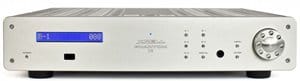
Krell Industries have announced the Phantom III, the first Krell preamplifier to include either an optional digital input module or a headphone output. The digital module features AES/EBU, coaxial, and optical digital inputs for use with streaming devices or other digital sources.

The Phantom preamplifier is a dual monaural design with the left and right channels given their own power supply regulation and individual circuit boards. All signal gain is executed with surface mount technology using proprietary multiple-output current mirrors. Featuring 700 kHz bandwidth in a zero feedback, balanced, Krell Current Mode design, the Phantom III shares the same design philosophy as the Phantom preamplifier. Negative feedback is not used anywhere in the preamp. The volume control is a balanced resistor ladder and the headphone circuitry is identical to the main circuitry, “offering private listening with the same performance as speaker playback”.

The digital module supports up to 24 bit/192kHz LPCM. All digital signals are fed to an ESS Sabre DAC and then sent to Krell’s Current Mode, discrete, balanced analogue circuitry. Being a modular design, the optional digital converter module can be added in the future.

The Phantom III preamplifier is available in silver or black finish.


Share

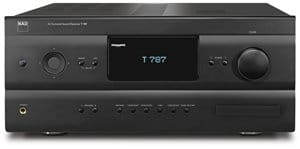
NAD has announced two new products targeted at both the home and the custom install market, the T787 and T777 AV Receivers.

The T787 and T777 are both 7-channel amplifiers that are power output rated at 4 ohms with all channels driven across the full 20Hz to 20kHz frequency range.

The T787 is rated at 120 wpc, and that is supported by the use of one power transformer dedicated solely to the front left and right channels, and a second transformer supplying the needed current to rest of the channels. The T777’s single transformer supplies enough current to enable its amplifier to still deliver a full 80 wpc. Both units provide Dolby TrueHD/DTS-HD Master Audio decoding, as well as analogue-to-HDMI video conversion and switching (1080p and 3D compatible) and also feature six HDMI inputs and two HDMI outputs (Audio Return Channel is also supported).


Share

Black Rhodium is a long-established UK cable company, headed up by industry veteran, Graham Nalty. A wide range of prices allow an equally diverse choice of cable construction technology as well as component materials and quality.  The upper echelons of the Black Rhodium cable range feature “deep cryogenically treated” (DCT) conductors and unusual conductor materials including silver (OK, that’s not so unusual) and palladium (which is not often encountered).  Rhodium plating on the connectors is also used in the higher price bracket.

This is the second appearance of Black Rhodium cables on Hifi Pig.  First time round fellow Hifi Piglet, Jake, and I had rather different opinions of the goods on offer – Jake recommended the Twist speaker cables as being a good value in their lower price band, I was a bit more equivocal about the balance of virtues and vices on offer.

This time, 4 types of Black Rhodium interconnect cables have been submitted for review, although 5 pairs of cables are actually covered.  This is because 2 versions of the Symphony cable have been supplied – one with chrome-plated RCA plugs and one with Bullet plugs.  Wow, fascinating! – I’ve not had the opportunity before to hear identical cables differently terminated.

I couldn’t resist this and started out with auditioning of the 2 pairs of Symphony cables.  As a matter of principal I usually do very little research about the items I review in advance of auditioning as I don’t want to be prejudicial about the technology or materials used, or even the price band of the item.  In this case, my interest in the cable termination differences resulted in my starting at the more expensive end of the cables under review and working my way down the price hierarchy.

All prices quoted in this review are for 1m pairs – although, helpfully, Black Rhodium say that they are happy to quote for custom lengths.

Symphony (£205) and Symphony Chrome interconnects (£160)

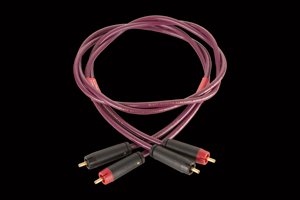
Symphony (Pictured) is a twin core silver plated high purity copper cable using PTFE inner insulation and close braided silver plated screening. The standard Symphony cable uses Eichmann Bullet plugs, whereas the Symphony Chrome uses Black Rhodium’s own Chrome RCA plugs.  XLR terminations can also be fitted, although they were not included in this review.

I liked both versions of the cable a lot, but the different RCA plugs used most definitely gave a differently balanced presentation.  I started the auditioning with Symphony Chrome playing a solo lute recording.  The Symphony Chrome presented a quite distinctive sound; very precisely focussed and a little 2-dimensional in terms of image depth, this almost sounded like a mono recording.  Some of the ambient cues of the Canadian church where the recording took place were subdued and the feeling of space correspondingly attenuated. The other side of this coin is that the Symphony Chrome sounded  dynamic and exciting with quite an upfront sound that captured my attention.  A generous amount of musical detail was to be had, as well.  Tonal resolution was very good, and vocalists and different instruments within a wind band, for example, were easily differentiated.  Bass was very good with excellent weight and good slam. More »

Share

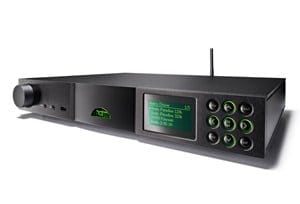
Naim have added the NAC-N 172 XS network connected streaming preamplifier to its range. Naim claim the unit is the “ideal proposition for those wanting to take their fist steps into the world of high-end streaming” and all you need to add is a power amplifier and loudspeakers to complete the package.

The NAC-N 172 XS offers streaming of music on your network at resolutions of upto 32bit/192kHz as well as the ability to tune into the myriad internet radio stations. On the from of the unit is a USB port allowing for the easy connection of iPods and other MP3 players. Audio from other sources is taken care of by five S/PDIF inputs.

The NAC-N 172 XS works as a conventional preamplifier too and is perfectly happy handling other sources such as CD players.


Share

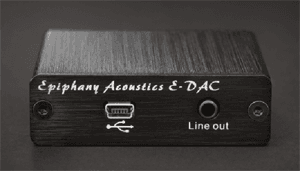
Epiphany Acoustics have announced the arrival of a new USB DAC to their product range. The E-DAC, is a £99.99, 24 bit DAC suited for high end computer audio.

The E-DAC is a stand alone USB digital-to-analogue converter which comes in a small brushed aluminium enclosure smaller than a credit card where the output is provided by a 3.5mm line out jack.

The E-DAC has been designed by the prolific NwAvGuy and is based on the TE7022L UAC1 engine and ES9023 DAC chip. It supports 16 bit and 24 bit at sample rates of 44.1kHz, 48kHz and 96kHz. The on-board filtered power supply reduces noise levels to “practically non-existent levels” and a crystal controlled oscillator further improves performance levels. The end result is a ‘plug and play’ DAC which sports distortion of less than 0.005%  and has a dynamic range of over 110dB.

Hifi Pig review of the Epiphany Acoustics E-DAC can be found here.


Share

More »

Share

The newly released DAC-100 accepts up to four digital input sources and features a digital volume control, a headphone amplifier section with low distortion, a high-resolution analogue RCA output stage, and a convenient wireless remote. The DAC-100 is compatible with both USB and S/PDIF.

The digital input stage of the NuForce unit operates in asynchronous mode which is independent of any timing errors associated with the incoming digital audio stream. The input stage synchronizes the data to an internally referenced timing signal and the re-clocking circuit’s accuracy is said to reduce Jitter to “near theoretical limits”

The headphone amp provides 500-milliwatts Single-Ended Class “A” power whilst the digital, 32-bit volume control is said to offer “precise channel tracking”.

The analogue pre is a minimalist design which NuForce say offers “a signal path that approaches a straight-wire-with-gain level of performance”.

The 24-bit, 192kHz DAC stage converts digital audio data back to an analogue signal at its native sampling rate and so no up-sampling or other data manipulation is used.

Cost in the US is $1095.


Share

Background

It’s been a while since I listened to any Harbeth loudspeakers (ok, it’s been decades!) but I recently had opportunity to take delivery of their Super HL5 stand mount speaker, the largest in the so called “domestic” range.  Let me explain; Harbeth have been making loudspeakers since 1977, many of which are used in broadcast studios (including the BBC).  This is no coincidence since the BBC’s senior audio research engineer, Dudley Hardwood founded the company.  He and his team designed one of the first loudspeaker cones to be made of Polypropylene which outperformed similar cones made from Bextrene (popular at the time) and Harbeth was born.  Their goal was to design a very clean and transparent sounding speaker which would excel at studio monitoring and in that, they succeeded.  The early Harbeths may not have been much to look at, but they were renowned for their natural sound.  Alan Shaw took over the company around 25 years ago and further improvements were made to the design, including the appearance.  For sure though, the secret of Harbeth’s success lies in the specially developed RADIAL midrange/bass drive units manufactured using injection moulding techniques as it’s these that are primarily responsible for the transparent and natural sound that Harbeth have become famous for.

Harbeth monitors are broken down into the domestic and the professional studio models (or “M” series) and the SHL5 sits at the higher end of the domestic range.  The “S” stands for “Super tweeter and the HL5 is a development of the original Harbeth monitor that started with the HL1.  The SHL5 measures in at 638 by 322 by 300mm and if that sounds close to the two cubic feet dimension which characterises BBC monitors, than that’s because it is! Only the M40.1 is larger at 750mm tall and is designed for serious full range studio applications (…or fabulous full range home loudspeakers!) More »

Share