









Reference Fidelity Components, the UK cable manufacturer that is rapidly gaining something of a reputation for quality interconnects and loudspeaker cables and who has just received a 5 star review in the UK hi-fi press, has announced the re-launch of two of their products in the company’s reference range of interconnects.

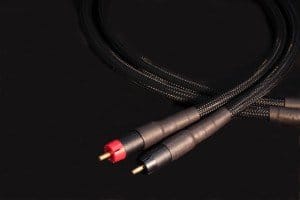
The Reference Pluto interconnect uses Furutech Alpha conductor which the company claims maintains detail and upper frequency performance. Eichmanns’ highly regarded Tellurium Copper Bullets are used for the connectors and RFC claim these are the very best plugs available at this price point. A one metre pair will cost you £99.50.

The all new Reference Mercury from the company maintains the same level of detail in its construction as all the cables in the company’s range but uses Furutech Hyper-balanced cable for the conductor and Eichmanns’ Silver Bullet plugs offering very low impedence, lower noise floor and better detail than standard RCAs . The cable is available at £165 per metre.

Hifi Pig hopes to carry a review of the cables very soon.


Share

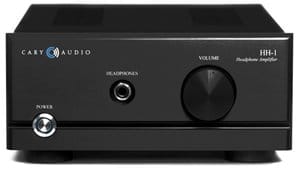
The HH-1 headphone amplifier from Cary Audio is a hybrid design featuring a valve input stage feeding a single-ended MOSFET output stage.  The HH-1 operates in class A mode at all levels and Cary say MOSFETs were chosen as they have sonic characteristics very similar to valves.The Cary HH-1 features a pair of RCA input jacks and a loop-through output pair making it simple to plumb into your existing set up.

Only two stages of amplification are used in the HH-1 for the shortest possible signal path and It is designed to drive headphones with an impedance between 30 and 600 ohms. The 30-second muting circuit prevents any annoying pops and clicks when turning on the HH-1 headphone amplifier, and ensures that the amplifier is fully stabilised before listening.


Share

Well today is Fete de la Musique in France and this is the one day of the year where towns and villages across the country put on a great deal of free music in their streets and bars. The whole country comes out in a big celebration of all things musical and a great time is had by all…needless to say it’s banging it down with rain here at the moment.

This got me thinking about live music and where hifi fits into all this. Hi-fi aficionados often claim that they are looking to recreate that “live experience” and I wondered where this came from and what it was about the “live” experience they wanted to recreate. The majority of my experience of live rock and electronic music is being surrounded by drunken mid-twenty somethings combined with pretty average sound reproduction and hi-fi it certainly is not. If that’s the experience folk are looking for then surely it can’t be that difficult to recreate; a couple of cases of cheap lager, turn the music-centre up full whack, get too many friends around and there you go…for the festival experience take the whole lot out into the garden and roll around in the mud. More »

Share
19. June 2012 · Write a comment · Categories: Comment · Tags: ,

There are those in hifi that like to collect boxes and I’m not ashamed to say that I count myself in this category. I like the fact that my hifi takes up a whole wall in one room of the house and I don’t think I would get the same satisfaction from a one box hi-fi system.  I can see the benefits of having all the component parts of a hifi in one convenient unit, but I’m afraid it just doesn’t appeal to me. That said I do quite like my hifi to be functional…ok I quite like ugly hifi…or hi-fi that most would consider to be ugly…I prefer the word “different”.

Currently there are 7 different boxes on my hifi shelf – a CD player, an amplifier (it’s integrated so there’s one less box I suppose), a turntable and all it’s little tools, a phono-stage, a headphone amp, a squeezebox and of course a pair of speakers. Of course there is more than one pair of speakers in the house as I seem to be a little magpie-like when it comes to loudspeakers. As I type this I just looked around the open plan living space and counted 3 pairs…all in use mind…and these all have associated amplifiers too. I think there is no hope for me! There’s more dotted round the house too…and another pair on the way. More »

Share

Hi-fi can mean so many things to different folk, so a quick search on the internet seemed in order and Wikipedia had the following to say: “High fidelity –  or hi-fi or hifi  – reproduction is a term used by home stereo listeners and home audio enthusiasts (audiophiles) to refer to high-quality reproduction of sound to distinguish it from the poorer quality sound produced by inexpensive audio equipment.”

I’m never even sure whether you should write hifi or hi-fi and so interchange the two at random!

This got me thinking! I participate in a number of hi-fi forums and no one person seems to agree on what hifi actually means. I suppose if being an audiophile meant the same to everyone then we would all be playing identical hi-fi systems, but the truth of the matter is that there are those with valve amplifiers, solid state amplifiers, horn loudspeakers, “normal” loudspeakers. Some audiophile folk prefer analogue front ends and use a record player, others prefer their hifi pleasure delivered by cd players and some prefer their music to be delivered by streaming hifi systems. There are those audiophile types who use digital sources, but then talk about how best to achieve an analogue sound. If I was starting out down the audiophile path all over again I have to say the world would look a lot more confusing than it did thirty years ago. More »

Share
27. March 2012 · 4 comments · Categories: Comment · Tags: ,

Hifi in the last twenty or so years seems to be being dragged in two completely disparate directions. On the one hand we have the hifi enthusiast (audiophile) who will go to almost any lengths to achieve the very best audio reproduction in the home and on the other we have a largely disinterested public who are more than happy to plug in their ipod and earbuds and listen to Mp3s they have downloaded.

In short the man in the street has stopped buying hifi and the market is becoming more and more polarised between very expensive hifi and nofi.

I’ve written about this before in my “Dream Hifi” article, but when I was a teenager I lusted after a good quality budget system and the magazines of the day championed budget hifi for those starting out on their hifi buying career. For those of you who were teenagers in the 80s I’m sure you remember the system – Dual turntable, Nad or Marantz amplifier and a pair of Kef or Wharfedale loudspeakers – a system that was not cheap, but was attainable for many.

Where are those champions now and where is the good quality budget hifi they were once promoting? How do we as an industry get Joe Public and in particular teenage Joe Public, interested in Hifi again?

Hifi manufacturers need to realise that offering a high quality, affordable hifi system is good economics – once a teenager realises that they can get a much better sound in their bedroom then they are much more likely to buy into the upgrade concept and in later years spend serious money on their music reproduction electronics. Good quality, budget hifi is a stepping stone drug that will eventually lead to a much harder addiction! More »

Share

Is is it a bit sad to have a dream hifi? It probably is you know, but I bet a pound to a penny that the vast majority of folk reading this have dreamed of owning a particular set up. Well perhaps they haven’t physically dreamed it as that would be a bit wrong, but you get my point I’m sure. More »

Share

Hifi Pig snoofled out an interesting site recently. The name is HiFi Hunter and its a great search engine to help you find kit that is being sold as second hand or ex-demonstration.

The site takes a good deal of the hassle out of searching for used gear and indexes loads of different sources to save you trawling all over the place to find what you want.

If you’re looking for a bit of a bargain then have a look at the latest adverts section of the site and if you’re looking for a specific bit of hi-fi that’s rare or unusual check out the featured listings.

It’s a great site indeed and definitely worth a quick visit even if you only want to check what a specific bit of hifi is worth.


Share

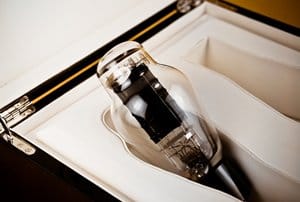
Western Electric and the Western Electric WE300B valve has long been the holy grail for aficionados of that particular flavour of tube, but rarity has made them all but impossible to buy and prices are astronomical.

All that searching and saving could now be at an end…sort of as Chinese tube manufacturer Psvane Audio has stepped up to make a 1:1 replica of the original WE300B.

According to Psvane Audio, “the Psvane WE300B Replica is: “100% 1:1 replica of WE300B, including materials, structure, internal and external size – up to the detail of a tiny screw used”.

The Western Electric 300B replicas will be sold in pairs, are delivered in a beautiful presentation box and likely to be expensive  – 1000$ a pair in the US.


Share

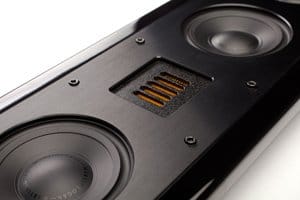
MartinLogan, well known the world over for their electrostatic speaker technology, announces this month the slender Motion® SLM, a wall-hanging or free standing LCR speaker that is ”powerful enough to stand alone and detailed enough to be used in conjunction with floor standing MartinLogan speakers”. The Motion SLM features dual four-inch, ultra-slim fibre cone woofers and dual four-inch high-velocity passive bass radiators, paired with a Folded Motion™ tweeter – all in an ultra-slim profile designed with super-thin TVs in mind.

The speakers are slim enough to complement even the thinnest of wall-mounted HD displays (even projection screens) and the Motion SLM is designed to step in where underpowered, unnatural sounding TV speakers fall short. The Motion SLM’s is said to have a “larger-than-its-size performance” and this down to the dual ultra-slim fibre cone woofers and high-velocity passive bass radiators, which provide low-end bass extension from an ultra-slim profile combined with the advanced resolution Folded Motion tweeter. The high-gloss black SLM cabinet is only 1.45-inches thin, for a total wall protrusion of 1.83-inches when used with magnetic grille and included wall mount bracket. More »

Share

It seemed that just a few short years ago, you couldn’t visit any major town or city without tripping over audiophiles in the foyers of hotels all intent on seeing the latest and greatest in hifi.  Well perhaps not, but there did seem to be more shows of an international bias, drawing crowds from far and wide.  Today, it’s refreshing to see shows such as the Wigwam Festival (this year re-named the Pie-Fi show due to its location at Melton Mowbray, home of the Pork Pie!) in addition to trade shows and fairs.  It demonstrates that hifi is alive and kicking, but for me there’s still one issue with many hifi shows.  They are speaking to the “converted” and are geared at either demonstrating wares to the hifi buying public or showing off very individual systems for those already bitten by the bug. More »

Share

For the 4th successive year, the HiFi Wigwam internet hifi & music forum has organised its very own hifi show.  This is hosted in the spacious Scalford Hall Hotel in the heart of rural Leicestershire UK, just outside the town of Melton Mowbray, which is otherwise famous for its pork pies!  Hifi Pigs beware …

For the first 2 years the Show was held in collaboration with Chester Group, who are experienced with organising hifi shows worldwide.  For 2011 and 2012, though, the Hifi Wigwam forum has been solely responsible.

Other than in the main reception area, hifi dealers and manufacturers are not allowed in!  Instead the show’s focus is on the real life hifi systems belonging to forum members.

Some 50 systems were presented this year, each in their own room, ranging from the small and low cost end of the spectrum to no holds barred super systems, and with components from well known established manufacturers to vintage hifi, and DIY constructions of amazing appearance! More »

Share

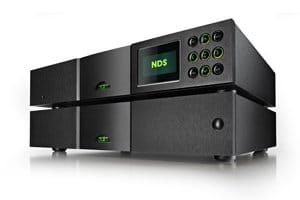
Naim has announced a new addition to its network player range -  the NDS. The new reference network player joins the NDX and ND5 XS and completes Naim’s range of streaming separates sources.

The NDS is an audiophile source, capable of playing and streaming audio over a home network at up to 24bit/192kHz resolution. It offers internet radio yet forgoes a DAB and FM radio tuner to minimise noise. It includes three S/PDIF digital inputs for connection to external digital sources, such as a computer or CD player. A front-panel USB port complets the feature set – either connect an iPhone or iPod digitally to allow the NDS to control and play stored audio or play audio from a USB memory stick, even hi-resolution WAV or FLAC files, with full on-screen control. The NDS will support all the main file formats. WAV, FLAC, AIFF, ALAC, AAC, Windows Media-formatted content, Ogg Vorbis and MP3 files are all catered for, as is gapless playback.

In true Naim reference engineering style, the NDS requires the use of an external power supply. The XP5 XS, XPS and 555 PS are all suitable matches. Performance can be further enhanced by the addition of a second Burndy cable (in the case of 555 PS only) splitting out the analogue and digital sections, which a second 555 PS will bring about even greater gains.

Like its fellow network players, the NDS can be controlled by Naim’s n-Stream control app for iPad, iPhone and iPod Touch. The app also alows control of a Naim system’s inputs and volume. The supplied remote and front-panel interface provide simple and easily accessed control.

Share

How many times have you listened to a set of ‘speakers in a showroom to be surprised, or even disappointed when after purchasing, dragging them (carefully) home and impatiently setting them up only to be rewarded with something that bore no relationship with the sound that you heard at the dealers?  Besides the usual caveats of allowing ‘speakers to break-in for 50 hours or more so that the moving parts can free up slightly, what else is there to be concerned with? More »

Share

Needs Must

In the main I like to listen to my music through real speakers, but, being the henpecked member of the farmyard, Hifi Pig sometimes has to either turn things off or resort to the use of headphones. Now I have my own listening space (to call it a listening “room” would be wholly inappropriate as its just one end of a large living area) I’m listening to lots more music and, let’s face it, sometimes the drivel on the television is just too much to take and a retreat to the sty and some soothing tunes is all there is for it.

It’s with the above in mind that I recently took the bull by the horns and decided to invest in a pair of decent quality headphones. The choice is bewildering, but I had certain criteria I needed to meet and so a short list was made: They needed to be comfortable, they needed to be open back ( I find that closed backs actually sound a little closed in and less airy than their open back counterparts) and they needed to sound good.

Now I’ve owned Grados in the past and liked the presentation and, despite many calling them uncomfortable, I’ve had no problems with them in this respect at all.  So it was with a certain degree of piggy trepidation I ordered a pair of the company’s 325is headphones. More »

Share

Part 2 in the ongoing cartridge shootouts -this time Denon MCs are put through their paces More »

Share

Now don’t get me wrong I do like computers. I use a computer daily. I’m even using one now to write this article. Computers have enabled me to work from home, do that away from the UK and even allows me communicate in real time with folks all over the world at the push of a mouse button. I get computers and I use one daily despite my sausage fingers and one fingered typing style!

Computers allow me to take photographs, edit them and see them almost immediately – no more trudging down the chemists with my roll of film and waiting a week before it comes back from the processing laboratory to view my snaps – No siree. I can catch up on the day’s news, share a joke with friends and even read the latest audiophile news and reviews on Hifi Pig (shameless plug). I can stream videos to my desktop and watch the latest antics of LOL Cats should the drudgery of work become all too much for me to take. More »

Share

Chord is a well-established British company who make a wide range of equipment covering a very broad price band.  You can spend just a few £hundred on a DAC or large multiples of tens of thousands on a fridge-sized amplifier!  Chord have a penchant for very distinctive-looking equipment chassis, lots of silver aluminium and a high tech – OK, some would say blingy! – appearance.  Chord are not shy of providing transparent windows into the chassis with internal lighting provided by LED – that wasn’t on offer with the CPM2600, though.

Since their foundation Chord have used switch mode power supplies (SMPS) which are much lighter, smaller and more efficient than the more traditional type, although they don’t have universal compatibility with partnering equipment.  And some audiophiles have no time for them at all because of perceived sonic characteristics. More »

Share

American muscle amp, blingy appearance, heatsinks along the sides.

Yawn – not another one?

Certified for THX – why are you wasting my time with this AV stuff?

Move along, nothing to see here for a 2-channel audiophile.

But wait – it’s wonderful! More »

Share

Having been impressed with MF’s most popular player on the block, the A5 CDP, I was curious to know how its diminutive sibling the XRay V8 would fare so managed to get hold of one for an audition.  It arrived neatly packaged with the separate off-board power supply unit, leads and remote.  Initial impressions on build were quite good.  Well screwed together and quite an unusual design with the long slim casings and separate (and quite beefy) psu.  Assembled and left to warm up, I had a look at the remote which is a plastic affair with far too many buttons and a confusing layout.  The remote is intended for the matching amplifier and tuner operation too and the overall impression is that MF intended this to be bought as a package with those units (X100 amp and X-Tuner).  They share a trademark casing design meant as an upgrade to the older cylindrical shaped units . More »

Share

This is one of the more, errr, ‘controversial’ CDPs of recent years. It got a thorough online blasting by that Lampizator chappie, who discovered that the DAC chipset used was a cheap and cheerful variety rather than the upmarket leading edge hi-tech item that was claimed! Nonetheless it received many very favourable reviews and online comments by others and even Lampizator gave it 10/10 for sound quality!

It’s a top loader with a neat sliding dark plastic panel, and a magnetic puck is supplied to hold a CD firmly in place.  A remarkably hefty item as well, it definitely inspires confidence.  Balanced (XLR) outputs as well as RCA.  Switchable by remote (when a CD is not playing) between the standard Red Book 44KHz and a choice of 88 or 196KHz upsampling.

I spotted one on a well known auction site and I thought it was worth a punt just to hear it for myself.
Well – I’m very, very glad that I did! More »

Share

Ho-hum … Cyrus?  Not a lot of audiophile credibility there!

Cyrus comes in for more than its share of flak on some of the online hifi forums, especially some of those that I frequent.  So I was more than a bit biased against the brand and I never would have gone out of my way to try it, to be honest.  But a swap deal was offered, so I thought I might as well give it a try – after all, Cyrus gear is easy enough to sell on.

In due course, the Cyrus CD8X arrived.  Neatly packed, well made in the famed half-size ‘shoe-box’ format. More »

Share

Design and Construction

I first came across these unusual ‘speakers a few years back when looking for replacements to a pair of Lumley AB300’s I owned, as I was after a high efficiency loudspeaker without some of the stereotyped high efficiency design colourations, and was lucky enough to find a pair courtesy of Jim at Audiolincs in Leicestershire. A 2 ½ hour drive later had me sat in his listening room with a pretty mammoth pair of loudspeakers facing me from about 9 feet away.  Build quality on these is up there with the very best.  Solid wood (not veneer) panel fronts are used for the substantial edgings with veneer to the main panels.  The panels themselves are very substantial and made from ¾ inch thick ply, heavily braced. More »

Share

Onkyo recently announced the release of the first models from its 2012 range. These comprise four receivers all engineered to deliver superior sound quality, better features, and value for money, compared to their outgoing equivalents.

Onkyo's TX-NR616 AV Reciever.

The receivers are:

TX-SR313 5.1-channel home cinema receiver
TX-NR414
networked 5.1-channel home cinema receiver
TX-NR515
networked 7.2-channel home cinema receiver
TX-NR616
THX Select2 Plus-certified home cinema receiver

Beginning with the affordable TX-SR313 (100w per channel) this boasts WRAT (Wide Range Amplifier Technology), a low negative-feedback design philosophy that Onkyo says “reduces signal noise and guarantees superb performance with minimal distortion”. Discrete output-stage components – not cheap ‘all-in-one’ chips –  are said to significantly improve audio quality. More »

Share

A new CD compiled by IsoTek, the pioneering brand of power conditioning products for hi-fi and home cinema systems, aims to improve the sound of audio systems by ensuring they are set up correctly and ready to perform at their best.

The Ultimate System Set-Up Disc comprises 20 tracks to test and fine-tune key elements of two-channel system performance, and is designed to be both practical and easy to use. The CD includes a selection of superbly performed, recorded and produced music from the legendary Opus3 audiophile record label, each one chosen to test specific elements of audio performance, together with a unique sequence of specially prepared sounds and test tones to help with things like speaker positioning and system optimisation.

Isoteks Ultimate System Set-Up Disc

The disc begins by testing stereo and phase, with further tests for basic speaker positioning, then stereo and front-to-back soundstage depth. These tracks (1 to 12) help to fine-tune the way a system is set up, in order to optimise its performance.

Tracks 13 and 14 provide a frequency range test – a useful way to examine the bandwidth that a system is able to deliver. The disc then concludes with six music tracks that have been specially selected from the Opus3 catalogue, each one capturing a certain quality associated with two-channel replay, be it timing, atmosphere, soundstaging, dynamics or bass depth.

The six music tracks from Opus3 include an interpretation of Frank Zappaʼs Dog Breath Variations/Uncle Meat by the Omnibus Wind Ensemble, Everybody Loves My Baby performed by Eva Taylor, Bachʼs Toccata and Fugue in D minor with organ played by Matthias Wager and a track from Eric Bibbʼs new album, Blues, Ballads & Work Songs.

The Ultimate System Set-Up Disc is available now from IsoTek stockists, priced at £19.95.

Share